- (a)(a) in the figure
- (b)(b) in the figure
- (c)(c) in the figure
- (d)(d) in the figure
Show answer and explanationHide answer
Answer: (a) (a) in the figure
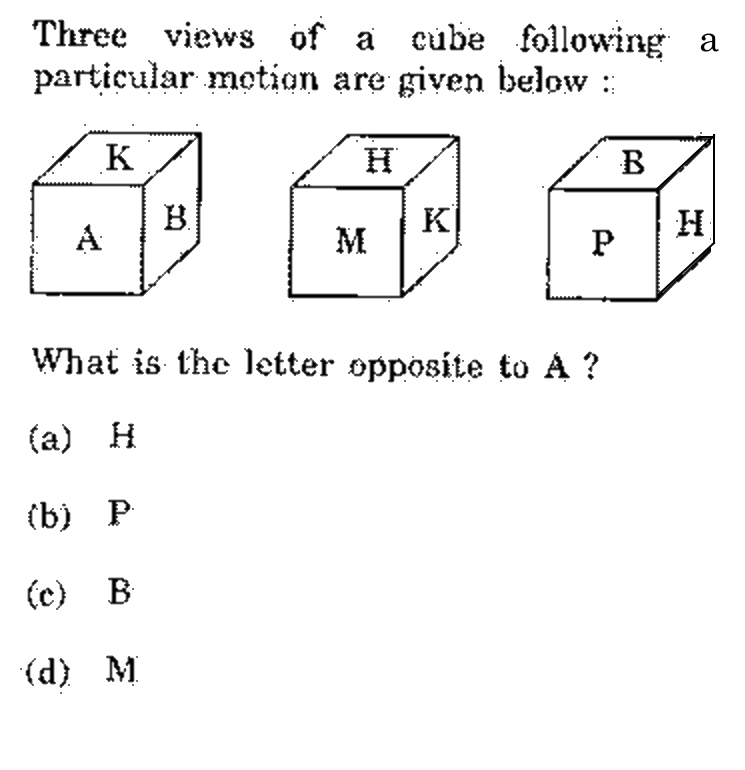
K touches A, B, H and M, so K is opposite P. B touches K, A, P and H, so B is opposite M. That leaves A opposite H.