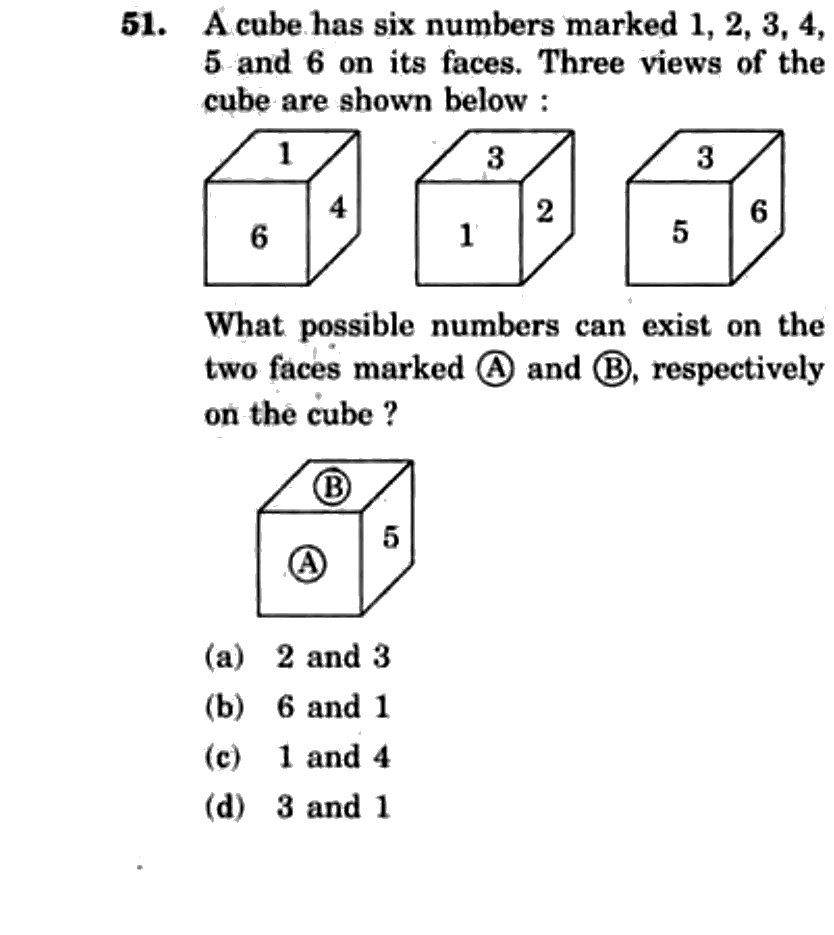
- (a)(a) in the figure
- (b)(b) in the figure
- (c)(c) in the figure
- (d)(d) in the figure
Show answer and explanationHide answer
Answer: (a) (a) in the figure
1 touches 6, 4, 3 and 2, so 1 is opposite 5. 3 touches 1, 2, 5 and 6, so 3 is opposite 4, and 2 is opposite 6. Faces next to 5 and to each other can be 2 and 3; every other option uses 1, which cannot touch 5.